
U.S. Support for Israel: Bunker-Busters, Not Boots on the Ground
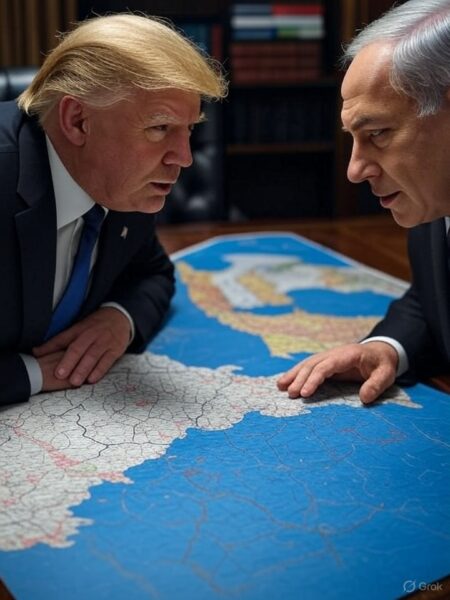
The escalating conflict between Israel and Iran has reached a critical juncture, with Iran’s nuclear ambitions threatening regional stability and global security. The United States, under President Donald Trump’s leadership, must take a strategic and restrained approach. Supporting Israel with the necessary bunker-buster munitions to neutralize Iran’s nuclear capabilities is essential, but entangling U.S. troops in another Middle East war would be a grave mistake. This article explores the rationale behind this stance, the implications of Iran’s nuclear program, and why America must prioritize diplomacy and limited support over direct military involvement.
The Threat of Iran’s Nuclear Program
Iran’s pursuit of nuclear weapons poses a dire threat to Israel, the Middle East, and the world. Despite Tehran’s claims that its nuclear program is for peaceful purposes, recent reports from the International Atomic Energy Agency (IAEA) indicate Iran has enriched uranium to near weapons-grade levels, potentially enough for multiple nuclear bombs. Israeli intelligence has further suggested Iran could produce a nuclear weapon in weeks, a timeline that demands urgent action.
For Israel, a nuclear-armed Iran is an existential threat. Iranian leaders have repeatedly called for Israel’s destruction, and a nuclear capability would embolden Tehran to act on its rhetoric. The ripple effects would destabilize the region, emboldening Iran’s proxies like Hezbollah and Hamas while threatening U.S. allies such as Saudi Arabia and Jordan. President Trump’s firm stance that “Iran cannot have a nuclear weapon” aligns with the need to prevent this catastrophic outcome.
Providing Israel with bunker-buster munitions, specifically the Massive Ordnance Penetrator (MOP), is a targeted solution. These 30,000-pound bombs, designed to penetrate deeply buried facilities like Iran’s Fordo nuclear site, are uniquely suited to destroy Iran’s nuclear infrastructure. Israel lacks the heavy bombers needed to deliver these munitions, making U.S. support critical. By supplying these weapons, Trump can empower Israel to act decisively without committing American forces to a broader conflict.
The Case for Limited U.S. Support
Supporting Israel with bunker-buster munitions reflects a pragmatic approach that aligns with Trump’s “America First” doctrine. This policy prioritizes U.S. interests while avoiding the costly entanglements of past Middle East wars. The Iraq and Afghanistan conflicts drained trillions of dollars and thousands of American lives, with little tangible benefit to national security. A new war with Iran would risk similar outcomes, drawing resources away from domestic priorities like border security and economic growth.
Israel, as America’s closest ally in the region, has the capability and resolve to confront Iran’s nuclear threat. Recent Israeli strikes on Iranian nuclear facilities, including Natanz, have demonstrated Jerusalem’s precision and effectiveness. However, the Fordo facility, buried deep underground, remains a challenge that requires advanced U.S. munitions. By providing these tools, Trump can bolster Israel’s defense without deploying U.S. troops or risking American lives.
This approach also preserves Trump’s diplomatic leverage. Despite the collapse of nuclear talks with Iran, Trump has expressed willingness to negotiate a deal that curbs Tehran’s nuclear ambitions. Supplying Israel with munitions strengthens Trump’s hand, signaling to Iran that failure to negotiate could lead to devastating Israeli strikes. This coercive diplomacy aligns with Trump’s track record of using strength to achieve peaceful resolutions, as seen in his outreach to North Korea and the Abraham Accords.
Why U.S. Troops Must Stay Out of the Israel-Iran Conflict
Direct U.S. military involvement in the Israel-Iran conflict would be a strategic and political misstep. Iran has prepared retaliatory strikes against U.S. bases in the region, and American intervention could trigger a broader war. The Houthis, Iran’s proxies in Yemen, could resume attacks on Red Sea shipping, disrupting global trade, while Iran might mine the Strait of Hormuz, spiking oil prices. These scenarios would harm the U.S. economy and erode public support for Trump’s agenda.
The American public is weary of “endless wars.” Trump’s 2024 campaign resonated with voters by promising to disentangle the U.S. from foreign conflicts. Joining Israel’s campaign against Iran would betray this pledge, alienating his base and fueling criticism from isolationist voices like Tucker Carlson and Marjorie Taylor-Greene. Even within Trump’s administration, figures like Vice President JD Vance and Director of National Intelligence Tulsi Gabbard have expressed skepticism about escalating U.S. involvement.
Moreover, the conflict is fundamentally Israel’s to resolve. Iran’s nuclear program directly threatens Israel’s survival, not America’s. While the U.S. has a moral and strategic interest in supporting its ally, this does not necessitate American boots on the ground. Israel’s military, backed by U.S. intelligence and munitions, is capable of delivering a decisive blow to Iran’s nuclear facilities. American involvement should be limited to logistical support, such as midair refueling or intelligence sharing, rather than active combat roles.
The Risks of Inaction Providing U.S. Support
Failing to support Israel with bunker-buster munitions carries significant risks. If Iran achieves nuclear breakout, it could trigger a regional arms race, with Saudi Arabia and others pursuing their nuclear programs. This would undermine U.S. influence and destabilize the Middle East further. A nuclear-armed Iran could also shield its terrorist proxies, increasing attacks on Israel and U.S. interests.
Israeli Prime Minister Benjamin Netanyahu has made clear that Israel will act unilaterally if necessary, but without U.S. munitions, its strikes may fall short of destroying Fordo. Incomplete strikes could embolden Iran, leading to retaliatory missile barrages and heightened regional tensions. By equipping Israel with the tools to succeed, Trump can prevent this scenario, ensuring Iran’s nuclear threat is neutralized efficiently.
U.S. Support: Balancing Strength and Restraint
President Trump faces a delicate balancing act. Supporting Israel with bunker-buster munitions demonstrates strength and resolve, reinforcing America’s commitment to its ally. However, avoiding direct military involvement preserves resources and public support for his domestic agenda. This dual approach reflects Trump’s pragmatic leadership, which seeks to project power while avoiding the pitfalls of overreach.
The Israel-Iran conflict underscores the need for a clear-eyed U.S. foreign policy. By empowering Israel to confront Iran’s nuclear threat, Trump can uphold his promise to prevent Tehran from acquiring a nuclear weapon. Simultaneously, keeping U.S. troops out of the fray honors his commitment to putting America first. This strategy offers the best path forward, safeguarding global security without sacrificing American interests.
The United States must support Israel with bunker-buster munitions to dismantle Iran’s nuclear program, but it should steadfastly avoid direct military involvement in the Israel-Iran conflict. President Trump’s leadership is pivotal in navigating this crisis, balancing support for a key ally with the imperative to keep America out of another Middle East war. By equipping Israel with the tools to succeed and pursuing coercive diplomacy, Trump can neutralize Iran’s nuclear threat while preserving U.S. resources and public trust. The stakes are high, but a strategic and restrained approach can secure a safer future for the region and the world.